
The Sheep’s Theory and the Actual Death
Three Bags FullThis thread follows Miss Maple’s confident but mistaken murder theory as the flock’s evidence gradually reveals George Glenn’s suicide.
increasing Bearing strength in each event
 decreasing
Bearing strength in each eventdecreasingA Peaceful Face
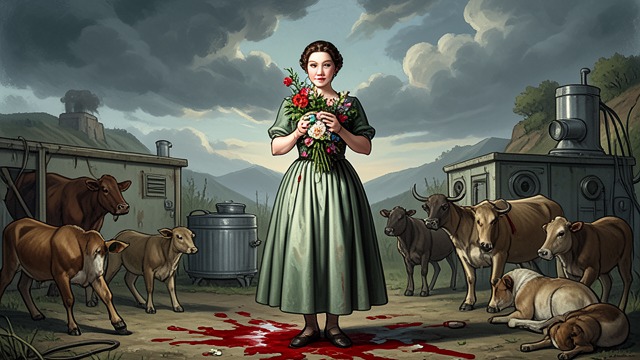
A Peaceful Face
An unsettling scene
Miss Maple sees that George’s face looks peaceful, with flowers in his fingers and little blood around the wound. These details do not fit the violent murder the sheep imagine.
Questions without answers
The body offers the flock no clear account of what happened. Miss Maple records her uncertainty, while the others focus on the spade and the need to identify a human culprit.
The Poisoning Report
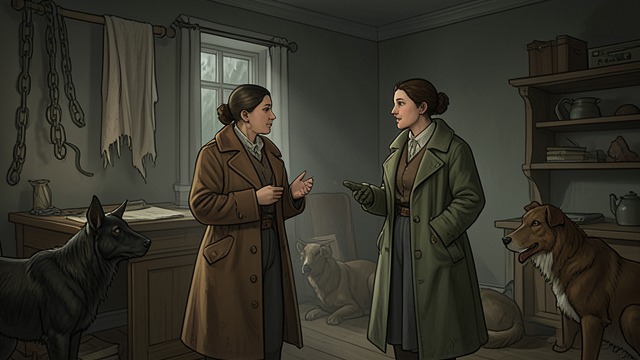
The Poisoning Report
A new account
Beth tells Rebecca that the police believe George was poisoned before the spade was driven into him. The sheep hear this secondhand while trying to understand the human visitors.
A revised mystery
The information explains why George did not cry out and why the meadow held little blood. It also makes the spade look like an act of staging rather than the cause of death.
The Haunted Suspect

The Haunted Suspect
A pattern of fear
Miss Maple notices Beth’s terror around the meadow and the caravan. She interprets the fear through the flock’s stories about ghosts and souls.
A misleading solution
The sheep conclude that Beth wanted to seize George’s soul and used the spade to keep his ghost from returning. The theory is imaginative, but it mistakes Beth’s guilt for proof of murder.
The Meaning of the Spade

The Meaning of the Spade
A symbolic deduction
Miss Maple links the spade to George’s vegetable garden and interprets it as part of Beth’s supposed plan to obtain his soul. Her reasoning turns familiar tools and beliefs into a single, coherent story.
Certainty before proof
The deduction gives the flock confidence and helps shape their staged accusation. Its flaw is that the sheep have mistaken an elaborate interpretation for direct evidence.
Suicide Named
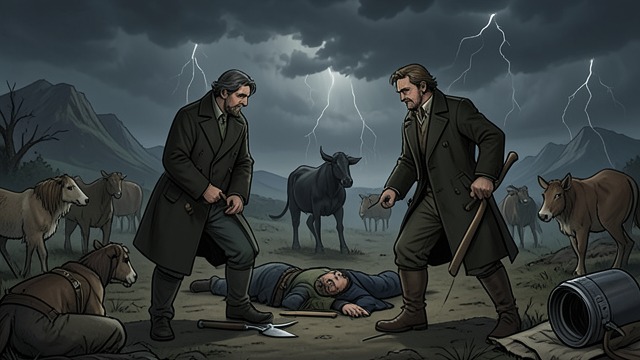
Suicide Named
Fosco supplies a word
Fosco recognizes the account as suicide: George had chosen not to go on living. The concept disrupts the flock’s assumption that life and the desire to live are always identical.
A truth that stays difficult
Beth’s confession confirms that she helped after George was already dead, not that she killed him. Miss Maple accepts the explanation, while the flock remains unable to comprehend the despair behind his decision.
When Miss Maple first examines George Glenn
During Rebecca’s early conversation with Beth
After the flock observes Beth near the caravan
During Miss Maple’s dream before the contest
After Beth speaks at the contest
